
Low Burn, High Yield: The Alabama Experiment That Gave Founders a Year of Free Rent
LATESTENTREPRENUERSHIP
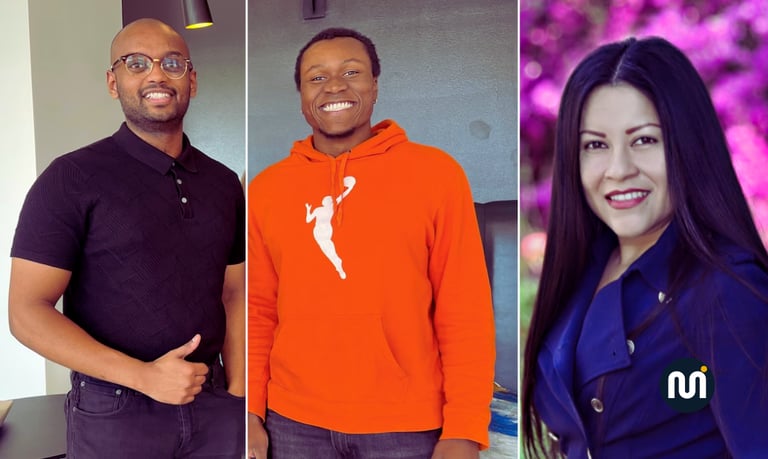
A bold pilot program in The Shoals gambled on giving three entrepreneurs a free home for 12 months. As the experiment ends, the results challenge the Silicon Valley dogma that you need to be in a big city to build big.
In the high-stakes world of entrepreneurship, the biggest killer of early-stage startups isn't a lack of product-market fit; it's the "burn rate"—the speed at which a company spends its cash before turning a profit. For three startup founders, that equation changed dramatically last January when they moved into a renovated historic triplex in Florence, Alabama, completely rent-free.
Now, one year later, the "Shoals Founder Residence" pilot has concluded. The experiment, a spin-off of the successful "Remote Shoals" incentive program, aimed to see if removing the burden of personal housing costs could accelerate business growth more effectively than a traditional cash grant. The verdict? For these founders, the "low burn" lifestyle didn't just save money—it saved their companies.
What Happened
In early 2025, the Shoals Economic Development Authority (SEDA) selected three founders from a pool of over 400 applicants to participate in a new "residency" track. Unlike the standard Remote Shoals program, which offers $10,000 cash to remote workers, this pilot provided a fully furnished home for 12 months, valued at approximately $24,000, plus free access to the local Shoals Shift incubator.
The cohort included:
Sarah Jenkins, founder of GreenLoop, a sustainable packaging logistics platform.
Davide Russo, a fintech developer building LedgerLite, a bookkeeping AI for freelancers.
Maya Al-Fayed, a creative director launching Studio 256, a remote-first branding agency.
The deal was simple: live here, build here, and engage with the community. As of this week, all three have hit the one-year mark. The headline news is that all three have chosen to stay in The Shoals, engaging in commercial leases or buying homes in the area, signaling a 100% retention rate for the pilot.
Why It Matters
This experiment highlights a shifting center of gravity in the entrepreneurship landscape.
For the Economy: Small cities are realizing they can compete with coastal tech hubs not by trying to mimic them, but by offering what New York and San Francisco cannot: runway. By subsidizing living costs, The Shoals effectively acted as a pre-seed investor, extending the life of these startups by 6–9 months purely through cost-of-living savings.
For Investors: Venture capitalists are taking note. "Geography-agnostic" funding is rising. Investors see that a check written to a founder in Alabama goes significantly further than one written to a founder in Palo Alto. Jenkins, for instance, used the $24,000 she would have spent on rent to hire a contract developer, accelerating her product roadmap by two quarters.
For Local Businesses: The ripple effect is tangible. These founders didn't just hoard cash; they spent it locally. From hiring local legal counsel to using neighborhood coffee shops as meeting rooms, the "multiplier effect" of high-skill entrepreneurs living in the community has proven to be a potent economic driver.
Context & Background
The Shoals region (comprising Florence, Muscle Shoals, Sheffield, and Tuscumbia) has been a pioneer in remote worker incentives since launching Remote Shoals in 2019. That program has already brought over $14 million in payroll to the area.
However, the "Founder Residence" pilot targeted a specific pain point: the loneliness and financial precarity of the solopreneur. By housing the three founders in a single triplex, the program engineered serendipity.
"We weren't just neighbors; we were an impromptu board of directors," says Russo. "When my server crashed at 11 p.m., Sarah was next door to talk me off the ledge. You can't put a price tag on that kind of immediate peer support."
This mirrors a broader "hacker house" trend seen in tech hubs, but applied with a civic development lens rather than a venture capital one.
What Happens Next
Following the success of the pilot, SEDA is reportedly evaluating an expansion of the program for late 2026.
Scaling Up: There are talks of converting underutilized commercial properties in downtown Sheffield into similar "live-work" units for a larger cohort of 10 founders.
The Alumni Network: Jenkins, Russo, and Al-Fayed are now forming a mentorship panel for the next incoming class, cementing a local "flywheel" of talent that attracts further talent.
Risks: As the area becomes more popular, the very affordability that attracts founders is under threat. Local leaders must balance the influx of high-earners with housing availability for long-time residents to avoid gentrification friction.
Evergreen: The "Runway" Equation
This section explains the critical concept of 'Runway' in entrepreneurship.
For a startup, "Runway" is the amount of time the company can survive before it runs out of cash. It is calculated as:
If a founder has $50,000 and spends $5,000 a month, they have 10 months to live. If they move to a low-cost city and reduce their personal and business burn to $2,500 a month, their runway instantly doubles to 20 months.
In the early stages, time is more valuable than money. Programs like the Shoals Founder Residence effectively gift founders time—the most precious resource for iterating a product until it succeeds.
Key Takeaways
100% Retention: All three founders in the pilot program chose to remain in Alabama after their free year ended.
Extension of Runway: By eliminating housing costs, founders reinvested savings into hiring and product development.
Community vs. Cash: The shared housing model provided peer support that participants rated as more valuable than a direct cash grant.
Economic Strategy: The program demonstrates how Tier-3 cities can attract high-value talent by leveraging their comparative advantage: low cost of living.
Future Expansion: Success has prompted discussions to scale the initiative, potentially rehabilitating more downtown properties for similar uses.
FAQ
1. Can anyone apply for this program?
The pilot was highly selective, targeting founders with scalable business models rather than general remote workers. However, the standard "Remote Shoals" program ($10,000 cash) is open to most full-time remote employees earning over $52,000.
2. Did the founders have to give up equity?
No. Unlike a startup accelerator (like Y Combinator) which takes 7% of your company, the Shoals program is an economic development grant. It is "equity-free."
3. Is the internet fast enough for tech startups in rural Alabama?
Yes. The Shoals area has invested heavily in fiber infrastructure. All three founders reported gigabit speeds comparable to or better than what they had in major metros.
Alabama region offering up to $10K for people to relocate to the area
This video features the Shoals Economic Development Authority explaining the mechanics of their relocation incentives, providing essential context on how the region structures these deals for newcomers.
Related Stories
The Money Impact © 2026
Business and finance explained by impact.
