
PepsiCo Cuts Prices: What This Means for Your Grocery Bill & Portfolio
LATESTMARKET
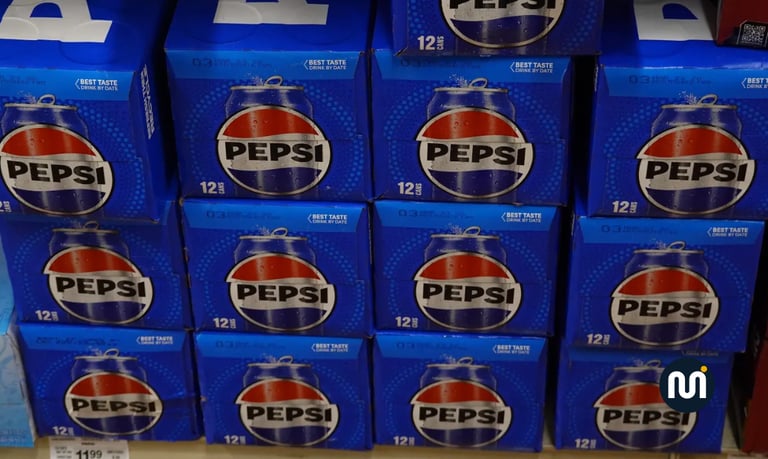
PepsiCo just announced price cuts and product slashes for 2026. Here is the breakdown of what this signals for inflation, your grocery bill, and your investments.
PepsiCo Beats Revenue but Slashes Prices and Products On Tuesday, February 3, 2026, PepsiCo reported Q4 2025 earnings that topped revenue expectations, driven by strong international sales and low-sugar beverages in the U.S. However, the stock slipped ~1% in premarket trading.
The real headline isn't the earnings beat—it’s the company's pivot. Facing consumer pushback, PepsiCo announced plans to cut prices by up to 15% on major brands like Lay's and Cheetos. Simultaneously, they plan to eliminate roughly 20% of their product variety (SKUs) in the U.S. to streamline operations, all while under pressure from activist investor Elliott Management to cut costs.
[Visual Suggestion: Insert a chart showing PepsiCo's stock price dipping slightly despite the "Revenue Beat" headline, juxtaposed with a photo of a bag of Lay's chips with a "Price Drop" graphic.]
2. The Translation (Plain English)
Why This Matters to You For the last few years, companies played a game called "Pass the Hot Potato." When their costs went up, they raised prices. When costs stabilized, they kept raising prices because they could.
Today’s news confirms that the game is over.
When a giant like PepsiCo—which owns everything from Gatorade to Quaker Oats—announces a 15% price cut, it’s an admission of defeat. It means you, the American consumer, finally broke their pricing power. You stopped buying $7 bags of chips, and now they are scrambling to win you back. This is a massive signal that the "inflation fever" in the grocery aisle is finally breaking, but it comes with a cost: less variety and aggressive cost-cutting at the corporate level.
The Headline: "PepsiCo Tops Revenue Estimates." The Reality: They are selling fewer actual items.
The media will focus on the fact that PepsiCo made more money than expected. That sounds like a booming economy. Don't be fooled.
The "Smart Money" is looking at Volume vs. Price. PepsiCo's revenue didn't go up because they sold more chips; it held up because they charged more for them internationally or relied on specific niches like low-sugar drinks. The fact that they have to slash prices and kill 20% of their products proves that their core business model—selling standard snacks to average Americans—is hitting a brick wall.
This isn't a growth story; it’s a survival story. They are shrinking the business (fewer products) to save the profit margins.
Think of the economy like a rubber band. For years, corporations stretched the rubber band by raising prices, testing how far consumers would stretch before snapping.
In 2026, the rubber band snapped back. This is called Elasticity of Demand.
When inflation was rampant, companies used it as cover to hike prices. But wages haven't kept up with the price of snacks. Now, we are entering a phase of Disinflationary Competition. Companies can no longer grow by charging more; they have to fight each other for your shrinking disposable income. To do that, they need to be leaner (cutting SKUs) and cheaper (cutting prices).
This is often the first domino in a cooling economy. First, you stop buying luxuries. Then, you stop buying name-brand chips. Then, the companies cut costs (and eventually jobs) to maintain their stock price.
Real World Impact
Here is how this boardroom decision hits your bank account:
Your Cost of Living (Groceries): Good News. Expect the cost of processed foods and snacks to drop. A 15% cut on Lay's is a signal to competitors (like Coke or Kraft-Heinz) that they must follow suit or lose market share. We are likely seeing the peak of grocery inflation.
Your Debt & Credit: Neutral to Negative. Why? Because companies cutting prices means they make less profit growth long-term unless they sell massive volume. If corporate profits squeeze, wage growth usually slows down. Don't expect a big raise this year just because chips are cheaper. Keep paying down high-interest debt aggressively.
Your Assets & 401k: Caution. If you hold "Consumer Staples" ETFs or individual stocks like Pepsi (PEP) or Coke (KO), be careful. These were considered "safe" investments because "people always gotta eat." But if they lose pricing power, their stock growth will stall. The market reaction (stock down despite a beat) shows investors are nervous about future profits.
Stay With me
Shop Brand-Agnostic: The "Brand Wars" have begun. Name brands are lowering prices to fight generics. Compare prices strictly per ounce—don't assume the generic is cheaper anymore, as name brands like Lay's might temporarily undercut them to regain your loyalty.
Audit Your "Staples" Stocks: If you manage your own portfolio, look at your exposure to big food companies. Are they relying on price hikes to grow earnings? If so, they might be in trouble in 2026. Look for companies with strong volume growth (selling more units), not just price growth.
Bank the Savings: If your grocery bill drops by $50 a month due to these price wars, do not spend it. Redirect that "found money" into your high-yield savings or debt payments. Deflationary periods are rare; use them to build liquidity.
Don't let the economy surprise you. Join our newsletter to stay ahead of the curve.
Related Stories
The Money Impact © 2026
Business and finance explained by impact.
