
The Algorithm Has New Masters: How the TikTok Deal Just Rewrote the Rules of the Attention Economy
LATESTECONOMY
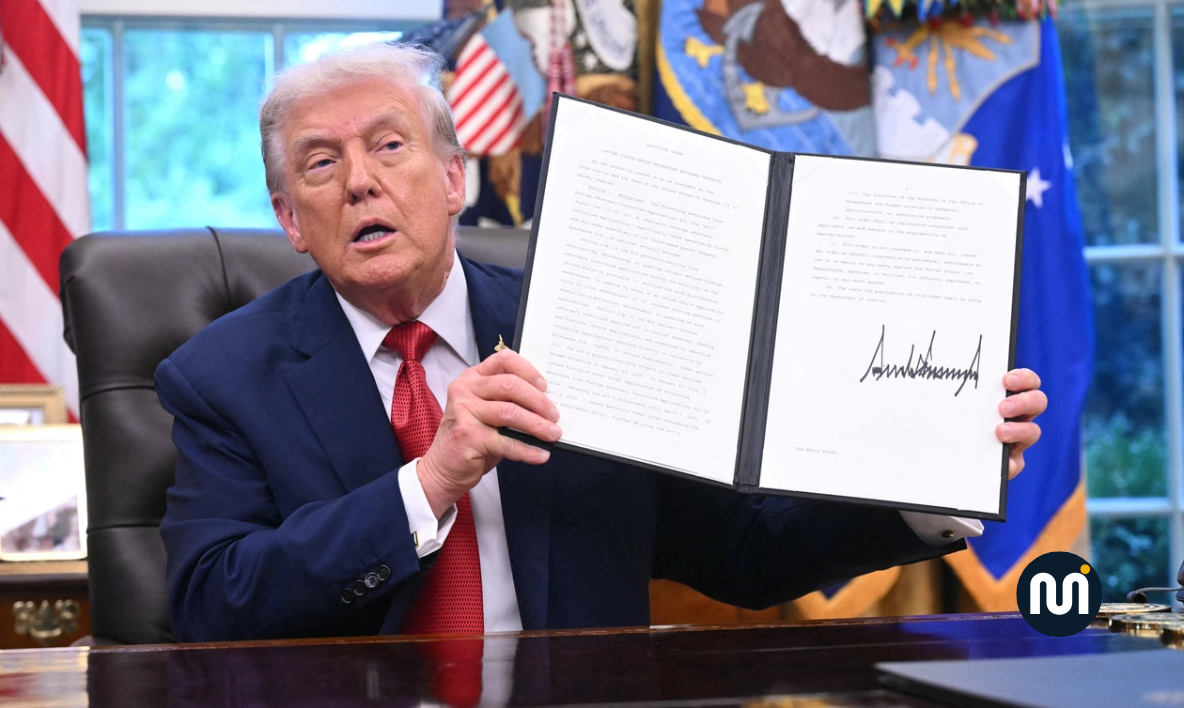
The battle for TikTok is over, and the new owners aren’t just business titans—they are political kingmakers. Here is why the "Red Feed" is the biggest economic shift of 2026.
The Purchase of Public Opinion
For the last two years, we have treated the "TikTok Ban" as a national security story. We were told it was about Chinese spies, data privacy, and protecting American teenagers. But this week, as the ink dries on the deal that hands the keys to TikTok’s U.S. operations to a consortium led by Oracle and allied investors, the mask has slipped.
This wasn't a rescue mission. It was a hostile takeover of the American cultural nervous system.
The deal, finalized just days before the absolute ban deadline, effectively keeps TikTok alive on 170 million American screens. But the app that survives isn't the same one that existed a month ago. By placing the "For You" algorithm under the stewardship of Larry Ellison’s Oracle—a firm whose leadership is deeply entwined with the current White House—we have witnessed the privatization of the modern public square by a specific political faction.
For the economy, this is a watershed moment. We are no longer talking about "Big Tech" as a neutral utility. We are watching the birth of the "Aligned Tech" era, where the most valuable corporate asset isn't revenue, but the ability to subtly tune the frequency of the national conversation.
The "For You" Page as a Political Asset
To understand the valuation of this deal, you have to throw out your standard Price-to-Earnings ratios. The value here is influence.
Think of the TikTok algorithm as the most sophisticated behavioral modification engine ever built. It decides what news you see, what trends you buy into, and ultimately, how you feel about the state of the world. For years, that engine was a black box in Beijing. Now, it is a black box in Austin, Texas, controlled by figures who have been explicitly vocal about their desire to reshape American culture.
This shifts the "Attention Economy" into uncharted territory. If the new ownership decides to tweak the code to de-emphasize "woke capital" or amplify "patriotic consumerism," they aren't just changing a playlist; they are moving markets. A 1% shift in algorithmic sentiment can make or break a consumer brand, a movie launch, or a political candidate.
The Advertiser's New Dilemma
For Madison Avenue, this deal is a nightmare disguised as a lifeline.
Advertisers love TikTok for its reach, but they hate volatility. The question keeping CMOs awake tonight is simple: "Is my brand safe on the 'Red Feed'?"
If the platform begins to skew noticeably rightward—or if it becomes a tool for administration-friendly narratives—global brands face a choice. Do they stay and risk alienating half their customer base, or do they leave and lose access to Gen Z?
We are already seeing the "balkanization" of ad spend. Just as cable news fractured into red (Fox) and blue (MSNBC) ecosystems, social media is following suit. This fragmentation makes marketing less efficient and more expensive. The days of the "universal campaign" are ending. In 2026, you might need two marketing strategies: one for the Blue Cloud and one for the Red Cloud.
The Splinternet is Here
This deal also hammers the final nail into the coffin of the "World Wide Web."
By forcing the sale of TikTok’s US operations into a sovereign silo, the United States has officially endorsed the "Splinternet." We are telling the world that digital platforms are not global commons, but national assets that must be owned by friendly locals.
Expect retaliation. If the U.S. can force the sale of a Chinese app to its political allies, why wouldn't the EU force the sale of Meta's European operations? Why wouldn't India demand a local owner for X?
For multinational corporations, this is a disaster. It means navigating a patchwork of digital fiefdoms, each with its own owners, rules, and political taxes. The efficiency of the global digital economy just took a massive hit.
What does this specific shock teach us about the next three years of investments?
Political Alignment is the New Moat.
For decades, investors looked for companies with "network effects" or "proprietary tech." The "Enduring Lesson" of the TikTok takeover is that the ultimate competitive advantage in 2026 is political cover.
The companies that thrive in this cycle won't necessarily be the ones with the best products; they will be the ones that are "friend-shored" into the administration’s ecosystem. If you are building a portfolio, stop looking for the next Steve Jobs and start looking for the next Larry Ellison—leaders who understand that in a politicized economy, the best way to secure your profit margin is to own the platform that sets the rules.
Related Stories
The Money Impact © 2026
Business and finance explained by impact.
