
The CEO Who Couldn’t Be Fired: A Crisis of Governance in the "Turnaround Economy"
LATESTJOBS
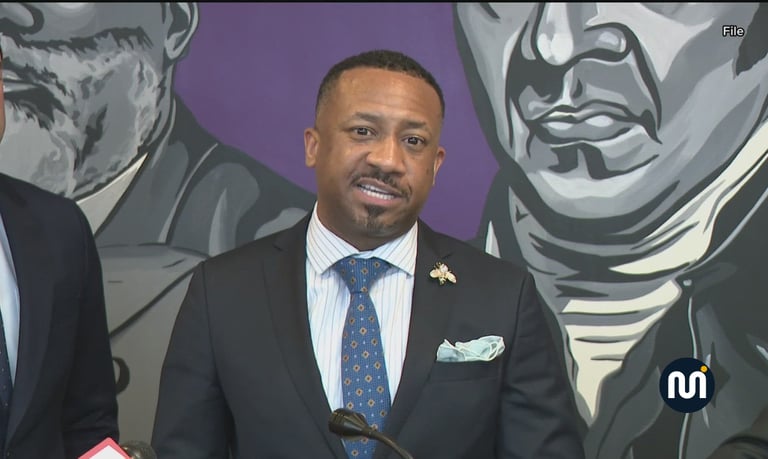
Morris Brown College just reinstated its president days after firing him. Here is why this governance shock serves as a critical warning for jobs and leadership stability in 2026.
The "Undo" Button on Executive Termination
In the corporate world, when a CEO is fired, they stay fired. The golden parachute is deployed, the interim leader steps in, and the stock price wobbles before finding a new floor. But on Tuesday, Morris Brown College—a historic institution that functions much like a high-stakes turnaround startup—hit the "undo" button on a termination that had rocked the education sector just one week prior.
Dr. Kevin James, the architect of one of the most improbable financial resurrections in recent history, is back on the job.
The reversal came as abruptly as the firing. On January 12, the Board of Trustees terminated James’s contract through 2029 without a specific cause, sparking a viral outcry from alumni and stakeholders. By January 20, the Board had issued a mea culpa that reads like a masterclass in governance failure, admitting the firing "did not fully comply with procedural and contractual requirements."
For anyone analyzing labor markets or executive stability, this isn't just a local news story. It is a flashing red light about the fragility of jobs at the highest level when governance disconnects from performance.
The "Turnaround Stock" of Higher Ed
To understand the magnitude of this blunder, you have to look at the "balance sheet" of Morris Brown College.
For twenty years, this institution was the educational equivalent of a delisted stock. It lost accreditation in 2002 due to a financial scandal, effectively shutting off the pipeline of federal financial aid. Enrollment plummeted from 2,000 students to roughly 50. It was a zombie entity—alive in name, but functionally insolvent.
Enter Dr. Kevin James in 2019. He took the "CEO" role with a mandate to achieve the impossible: the "Hard Reset." Under his leadership, the college did what few thought possible. It regained full accreditation in 2022, restored federal financial aid access, and cleaned up the audits. Enrollment surged. In market terms, James took a penny stock and made it viable again.The "Undo" Button on Executive Termination
In the corporate world, when a CEO is fired, they stay fired. The golden parachute is deployed, the interim leader steps in, and the stock price wobbles before finding a new floor. But on Tuesday, Morris Brown College—a historic institution that functions much like a high-stakes turnaround startup—hit the "undo" button on a termination that had rocked the education sector just one week prior.
Dr. Kevin James, the architect of one of the most improbable financial resurrections in recent history, is back on the job.
The reversal came as abruptly as the firing. On January 12, the Board of Trustees terminated James’s contract through 2029 without a specific cause, sparking a viral outcry from alumni and stakeholders. By January 20, the Board had issued a mea culpa that reads like a masterclass in governance failure, admitting the firing "did not fully comply with procedural and contractual requirements."
For anyone analyzing labor markets or executive stability, this isn't just a local news story. It is a flashing red light about the fragility of jobs at the highest level when governance disconnects from performance.
The "Turnaround Stock" of Higher Ed
To understand the magnitude of this blunder, you have to look at the "balance sheet" of Morris Brown College.
For twenty years, this institution was the educational equivalent of a delisted stock. It lost accreditation in 2002 due to a financial scandal, effectively shutting off the pipeline of federal financial aid. Enrollment plummeted from 2,000 students to roughly 50. It was a zombie entity—alive in name, but functionally insolvent.
Enter Dr. Kevin James in 2019. He took the "CEO" role with a mandate to achieve the impossible: the "Hard Reset." Under his leadership, the college did what few thought possible. It regained full accreditation in 2022, restored federal financial aid access, and cleaned up the audits. Enrollment surged. In market terms, James took a penny stock and made it viable again.
The Boardroom Coup that Backfired
So, why fire the rainmaker?
The Board’s initial move to oust James—just weeks before a critical accreditation reaffirmation review—smacked of a hostile boardroom coup. While vague allusions to "workplace culture" and "allegations" have surfaced in leaked documents, the Board’s official retraction focused on their own procedural failures.
This reveals a harsh reality about the current landscape of executive jobs: Performance does not always insulate you from politics.
In the private sector, firing a high-performing CEO without a watertight legal strategy is suicide. Shareholders would revolt. At Morris Brown, the "shareholders"—the alumni and students—did exactly that. They recognized that the stability of their investment (the college's future) was inextricably linked to the stability of the leader's job.
The Fragility of the "Contract"
This saga exposes a macro-trend affecting the upper echelons of the labor market: the eroding durability of the employment contract.
James had a contract through 2029. It supposedly protected him. Yet, a vote by a handful of trustees was enough to temporarily void it. He was reinstated not because the Board suddenly fell back in love with his leadership style, but because they realized they had exposed the institution to catastrophic legal and reputational liability.
It is a stark reminder for every executive: Your employment agreement is only as strong as the governance structure above you. If the board is reactive, inexperienced, or divided, your multi-year contract is effectively a day-to-day agreement.
The Market Reaction: Chaos is Expensive
The cost of this one-week governance crisis is hard to quantify but easy to see.
Reputational Capital: The "Hard Reset" narrative is now tarnished by instability. Donors hate uncertainty.
Operational Drag: Instead of prepping for the accreditation review—a "make or break" audit for the college's license to operate—the leadership team spent a week fighting for survival.
Talent Risk: Top talent watches these events. Who wants to take a job at an organization where the high-performer gets axed without process?
The Enduring Lesson
What does this specific shock teach us about the next three years of investments and market behavior?
Governance is the "Hidden Beta."
Investors and analysts spend hours looking at P/L statements and growth charts. They spend far less time looking at the Board of Directors. The "Enduring Lesson" here is that governance risk is the silent killer of value.
Whether you are investing in a publicly traded company or taking a C-suite job, you must vet the board as rigorously as you vet the financials. A brilliant CEO cannot outrun a dysfunctional governance structure. In the coming years, as organizations face tighter margins and higher scrutiny, the stability of the people overseeing the jobs will matter just as much as the people doing them.
Dr. James is back at his desk, but the lesson remains: In a fragile economy, a bad board is the fastest way to turn a recovery into a recession.
Related Stories
The Money Impact © 2026
Business and finance explained by impact.
