
The Great Pause: Why the Fed Just Turned Off the Tap (And Why They Are Fighting Each Other)
LATESTMARKET
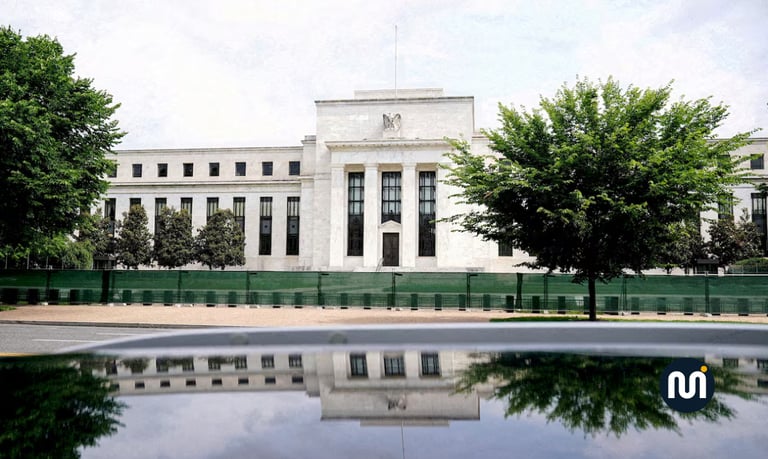
The Federal Reserve just froze interest rates, shocking a market addicted to cuts. With two governors dissenting and inflation stuck, here is why the "easy money" era is officially on hold.
The Punch Bowl Has Been Pulled
The "Pivot Party" on Wall Street just got shut down by the cops.
For the last six months, the financial world has operated on a single, comforting assumption: The Federal Reserve is done with inflation, and interest rates are on a one-way elevator down. Traders priced in a cut for January. Mortgage lenders started advertising lower rates. The vibe was "mission accomplished."
On Wednesday afternoon, Jerome Powell walked into the press room and smashed that narrative to pieces.
The Fed has decided to hold the benchmark interest rate steady at 3.50%–3.75%, defying market expectations for a cut. But the real shock wasn't the pause; it was the chaos behind the curtain. For the first time in years, the decision was not unanimous. Two heavyweights of the committee, Governors Christopher Waller and Stephen Miran, voted against the pause, arguing the economy needs cheaper money now.
This is no longer a unified Fed guiding the ship; it is a divided house arguing over the steering wheel while the economy hurtles down the highway at 80 miles per hour.
The "Tariff" Elephant in the Room
Why hit the brakes now?
The official statement cites "somewhat elevated" inflation. But if you read between the lines (and look at the recent headlines), the real culprit is clear: The "Greenland Volatility."
The Fed is forward-looking. They aren't just looking at the price of eggs today; they are looking at the price of steel and shipping tomorrow. With the administration’s recent threats of 10-25% tariffs on European allies, the central bank is terrified of a "second wave" of inflation. If the U.S. government artificially raises the price of imports, the Fed cannot afford to lower the cost of borrowing. That is the recipe for 1970s-style stagflation, and Powell knows it.
By pausing, Powell is effectively saying, "We aren't cutting rates until we know if the President is actually going to start a trade war."
A "Civil War" at the Central Bank
The most alarming signal for investors is the dissent. The Federal Reserve prides itself on boring, consensus decisions. A 10-2 vote is a scream of conflict.
Waller and Miran’s dissent suggests a terrifying possibility: The Fed might be falling behind the curve. They argue that with the labor market "stabilizing" (a polite word for slowing) and job gains looking weak, keeping rates this high is dangerous. They fear that by obsessing over inflation ghosts, Powell is going to accidentally strangle the labor market.
This leaves you, the investor, caught in the crossfire. One camp of the Fed wants to protect the dollar (hold rates); the other wants to protect your job (cut rates). Until they agree, volatility is guaranteed.
The "Higher for Longer" Hangover
For the average American, this "pause" is painful news.
If you were waiting for January 28th to refinance your mortgage or take out a small business loan, the window just slammed shut. A 3.5% Fed Funds rate means mortgages likely stay stuck near 6% or 7%. It means credit card APRs remain punitive.
The market reaction confirms the disappointment. The "soft landing" scenario depended on a steady drip of rate cuts. By turning off the tap, the Fed is testing the economy’s stamina. Can Amazon (which just laid off 16,000 people) and other tech giants keep growing without cheap leverage? Can the housing market thaw out without mortgage relief?
We are about to find out.
What does this specific shock teach us about the next three years of investments?
Don't Fight the Fed, But Don't Trust Them Either.
For the last decade, the "Fed Put" was the ultimate safety net. If things got bad, the Fed would cut rates. The "Enduring Lesson" of the January Pause is that political dominance has broken the Fed Put.
The central bank is now paralyzed by fiscal policy (tariffs/spending). They cannot act independently when the White House is throwing economic flashbangs.
For Borrowers: Stop waiting for the "perfect" rate. Volatility is here to stay. If the numbers work now, lock them in.
For Investors: The division in the Fed means "Forward Guidance" is useless. Powell can’t promise what the committee will do because he can barely control the committee. Hedging against both inflation (Gold) and deflation (Treasuries) is no longer contradictory; it’s necessary.
The era of the "autopilot" economy is over. The pilots are fighting, and the seatbelt sign is definitely on.
Related Stories
The Money Impact © 2026
Business and finance explained by impact.
