
The Greenland U-Turn: Why the Market’s Relief Rally Is a False Comfort
LATESTMARKET
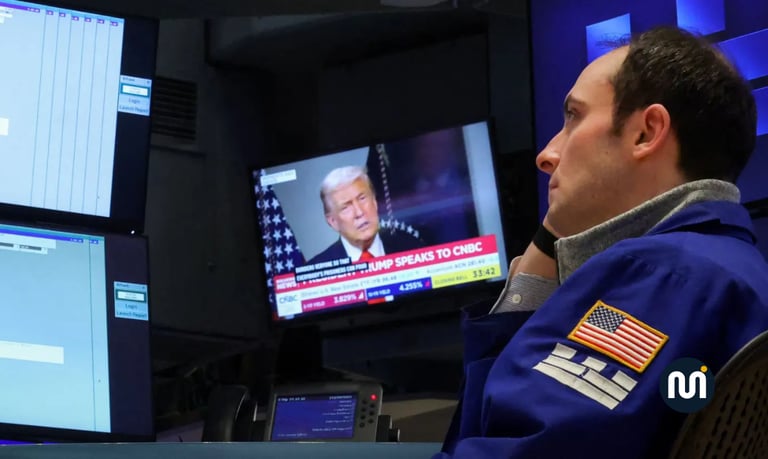
Stocks surged as President Trump withdrew his Greenland tariff threats. Here is why this specific market whipsaw is the new normal for your money—and why the volatility isn’t over.
The "Art of the Deal" Just Cost You Your Sanity
If you blinked this week, you missed a miniature recession and a full recovery.
On Tuesday, the global market was staring down the barrel of a trade war with our closest European allies, all over a real estate dispute involving an island of ice. By Thursday, the S&P 500 was rallying, the Nasdaq was green, and the White House was claiming victory with a vague "framework" for a deal on Greenland.
Wall Street let out a collective exhale. The tariffs on German cars, British pharmaceuticals, and Danish machinery—scheduled to hit February 1st—are off the table. The algorithms read the headlines, saw the word "canceled," and hit the buy button.
But if you are treating this rally as a signal that the coast is clear, you are making a dangerous mistake.
This week wasn't a glitch; it was a blueprint. We just witnessed the "Trump Trade" in its purest, most volatile form: maximum pressure applied to a geopolitical ally, followed by a sudden de-escalation that allows the President to claim a win. The market cheered the resolution, but it ignored the cost of the ride.
The Boy Who Cried "Tariff"
To understand why this rally is fragile, we have to look at the mechanism of the last 72 hours.
The President threatened a 10% tariff on eight specific nations—including the UK, France, and Germany—not because of a trade imbalance, but because he wanted to buy sovereign territory. When the European Union threatened to deploy its "trade bazooka" (the Anti-Coercion Instrument) and NATO stepped in to broker a face-saving "framework," the threat evaporated.
The market loves a resolution. Retail stocks, automakers, and tech giants with heavy European exposure led the charge upward today. Gold, which had smashed records earlier in the week as a panic hedge, dropped back down as the fear subsided.
However, this creates a psychological hazard for investors known as "normalization of deviance."
The more often the White House threatens a nuclear option and then pulls back, the more the market begins to price these threats as noise. Investors start thinking, "He’s just bluffing." The danger arises when he isn't bluffing. If the market stops reacting to threats, it leaves itself completely unhedged for the day a tariff actually sticks. We are effectively training the market to ignore risk right up until the moment it crashes.
The "Headline Algorithm"
This week also proved that we are living in a headline-driven economy. Fundamental data—earnings, P/E ratios, supply chains—didn't change between Tuesday and Thursday. The only thing that changed was the political narrative.
For the average investor, this is exhausting. You cannot model a portfolio based on whether a NATO meeting goes well.
The rally we are seeing today is largely driven by "short covering"—traders who bet against the market on Tuesday buying back in panic today. It’s not organic growth; it’s mechanical relief. The underlying issue—that the U.S. is willing to use economic weapons against NATO allies for territorial expansion—remains a structural risk to the global market architecture.
The Enduring Lesson
What does this specific shock teach us about the next three years of investments?
Volatility is the Feature, Not the Bug.
The "Greenland Gamble" teaches us that in 2026, political risk is the primary driver of asset prices.
For the last decade, we watched the Federal Reserve. For the next three years, we have to watch the White House Twitter feed. The "Enduring Lesson" is that you cannot trade these swings; you can only weather them.
The investors who lost money this week were the ones who panic-sold on Tuesday or panic-bought on Thursday. The winners were the ones who stayed diversified and ignored the noise. The market will continue to be whiplashed by these "deal-making" tactics. Your job is not to react to the whip, but to build a portfolio that can survive the lashing. Expect this cycle—Threat, Panic, Deal, Rally—to be the rhythm of the next three years. Don't dance to it; just make sure you don't get stepped on.
Related Stories
The Money Impact © 2026
Business and finance explained by impact.
