
The Greenland Ultimatum: Why a Real Estate Deal Just Became the Market’s Biggest Risk
LATESTECONOMYMARKET
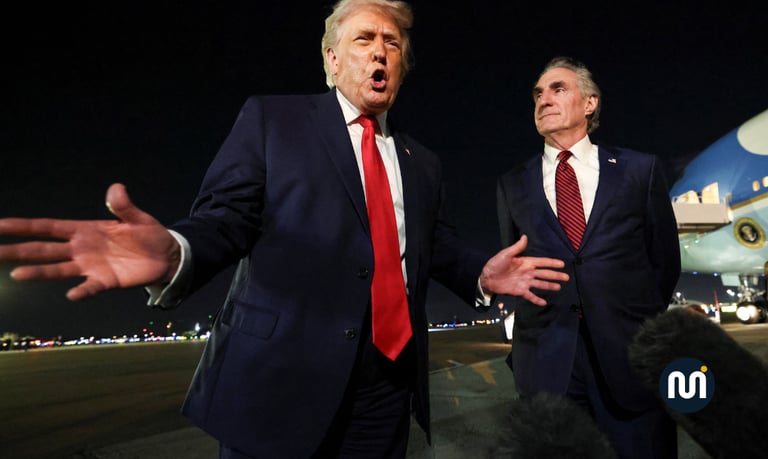
President Trump’s shock tariff threat over Greenland has sent markets tumbling and gold soaring. Here is why this geopolitical twist changes the investment playbook for 2026.
The Price of a Map
The global market was just handed a bill it didn't budget for. In a move that has rewritten the rules of risk management overnight, the White House has issued a stark ultimatum to eight of America’s closest European allies: facilitate the sale of Greenland to the United States, or face a punishing 10% tariff on all goods starting in February. If a deal isn't reached by June, that penalty climbs to 25%.
This isn't just diplomatic noise; it is a direct hit to the plumbing of the global economy. The immediate reaction was a violent "risk-off" pivot. As Wall Street woke up to the reality that a land dispute could sever supply chains, the S&P 500 posted its worst day in months, shedding over 2%. Across the Atlantic, the FTSE 100 and DAX slumped as investors realized that German cars and British luxury goods are now bargaining chips in a high-stakes real estate negotiation.
The "Safe Haven" Stampede
If you want to know how scared the big money is, don't look at the stock ticker; look at the commodities desk. Gold didn't just tick up—it smashed through records, breaking the $4,700 barrier.
This is the classic "flight to safety" in action, but with a twist. Usually, investors run to gold when the economy is failing. This time, they are running because the rules of the economy are changing. When a text message about a Nobel Peace Prize snub can trigger a trade war—as reports suggest was the catalyst for this ultimatum—traditional valuation models break down. Investors are buying gold not just as a hedge against inflation, but as a hedge against chaos.
Winners and Losers in the New Arctic Cold War
While the broader indices are bleeding, a distinct pattern has emerged beneath the surface. This isn't a universal sell-off; it's a rotation.
The Losers: Sectors that rely on the free flow of goods across the Atlantic are being hammered. Retail giants, luxury brands like Burberry, and European automakers like BMW and Volkswagen are staring at a margin-crushing tax. Tech darlings like Nvidia and Amazon also took a hit, proving that even AI can't outrun geopolitical friction.
The Winners: Defense and Mining. The market is betting that if the Arctic is the new prize, you want to own the companies that secure it and the companies that dig it up. Defense contractors like BAE Systems bucked the negative trend, rallying as the narrative shifted from "trade dispute" to "national security."
The "Bazooka" on the Table
The scariest part of this story isn't the tariffs themselves; it's what comes next. Europe is no longer the passive trading partner of the last decade. In Brussels, officials are dusting off the "Anti-Coercion Instrument" (ACI)—known in diplomatic circles as the "trade bazooka."
This tool allows the EU to retaliate not just with counter-tariffs, but by freezing American companies out of public contracts and targeting intellectual property rights. If the EU pulls this trigger, we aren't just looking at more expensive Volkswagens. We are looking at a fragmented digital market where American tech firms face a regulatory minefield in Europe. The IMF has already warned this "spiral of escalation" is the single biggest threat to global growth this year.
What does this specific shock teach us about the next three years?
Geopolitics is the New P/E Ratio.
For the last twenty years, investors have treated politics as background noise—something to ignore while focusing on earnings reports. That era is dead. The "Enduring Lesson" of the Greenland shock is that sovereign risk is now a primary input for every portfolio.
We are entering a cycle where borders are fluid and alliances are transactional. The most resilient investments in 2026 won't necessarily be the ones with the best cash flow, but the ones with the best insulation from political crossfire. If you aren't hedging for a world where a map can change overnight, you aren't really managing risk.
Related Stories
The Money Impact © 2026
Business and finance explained by impact.
