
The Last Guardrail: Why the Supreme Court Fight Over Lisa Cook Is the Only Economic Story That Matters
LATESTECONOMY
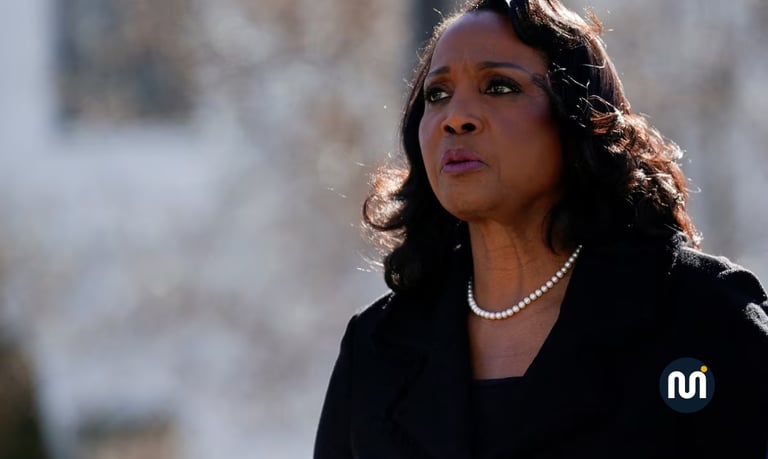
The Supreme Court is deciding if the President can fire Federal Reserve governors at will. Here is why Trump v. Cook could effectively end the era of independent central banking.
The Day the "Fed Put" Became Political
Forget the inflation data. Forget the earnings reports from NVIDIA or Apple. The most important financial event of the decade took place yesterday in a quiet courtroom in Washington, D.C., where nine justices began deciding whether the U.S. dollar is managed by economists or by politicians.
We are watching the end game of a conflict that has been simmering since August 2025. When President Trump attempted to fire Federal Reserve Governor Lisa Cook, citing "mortgage fraud" allegations that felt more like tabloid fodder than legal grounds, the markets treated it as noise. But as oral arguments opened in Trump v. Cook this Wednesday, the noise became a siren.
The central question is terrifyingly simple: Can the President of the United States fire a Federal Reserve governor before their term expires?
If the answer is "yes," the Federal Reserve as we know it—an independent fortress that sets interest rates based on data, not polling numbers—is effectively dead. And if the Fed dies, the risk premium on every asset you own, from your 401(k) to your home, just went up.
The "Unitary" Threat to Your Wallet
To understand why this case is keeping bond traders awake at night, you have to look past the legal jargon. The President’s legal team, led by Solicitor General John Sauer, is pushing a theory known as the "Unitary Executive."
In plain English, this is the "I’m the Boss" theory. It argues that because the President is the head of the executive branch, every single federal employee—including the people who decide how much it costs to borrow money—must be fireable at his whim.
The defense, led by veteran lawyer Paul Clement, countered with a reality check that seemed to resonate even with conservative justices. If the President can fire a governor for "cause," and the President alone gets to decide what "cause" means without a court reviewing it, then "cause" is just a fancy word for "disagreement."
Justice Brett Kavanaugh, typically a staunch defender of executive power, cut to the heart of the matter with a comment that likely sparked relief rallies in trading pits: "Your position... would weaken, if not shatter, the independence of the Federal Reserve."
The "Nuclear" Option in the Chamber
The drama inside the court was matched only by the guest list. Sitting in the audience was none other than Fed Chair Jerome Powell.
Powell isn't just a spectator; he is the next target. It is an open secret in Washington that the attack on Lisa Cook is a dry run for removing Powell. The Chair is currently facing his own "scandal"—a criminal investigation into cost overruns at the Fed’s HQ renovation—which Powell has publicly called a "pretext" for pressuring him to cut interest rates.
Seeing the Chairman of the Federal Reserve sitting in the Supreme Court gallery, watching a legal battle that will determine his own professional survival, is a visual that belongs in a banana republic, not the world’s reserve currency issuer.
Why Markets Are "Pricing In" Chaos
You might be thinking, "Who cares about bureaucratic fighting?"
Here is why you should care: The economy runs on trust. Specifically, the trust that the people printing the money aren't doing it to win an election.
If the Court rules against Cook, the market will immediately price in a "Political Business Cycle." This means investors will assume that interest rates will be artificially slashed before every election (causing inflation) and hiked afterward.
Bond Yields: Will spike. Lenders will demand higher interest to lend to a government that treats its central bank like a campaign arm.
The Dollar: Could lose its status as the global safe haven.
Inflation: Will no longer be a target to hit, but a variable to trade.
The Enduring Lesson
What does this specific shock teach us about the next three years of investments?
Institutional Alpha is Gone.
For forty years, investors could assume that the "rules of the game" were static. The Fed was the referee, and the referee was neutral. The "Enduring Lesson" of Trump v. Cook is that the referee is now part of the game.
Going forward, you cannot just model economic data; you have to model institutional durability. We are entering an era where the safety of your assets depends not just on the solvency of the issuer, but on the legal independence of the regulator. If the Supreme Court cracks the door open for political control of the Fed, the smartest trade in 2026 won't be stocks or bonds—it will be anything that the government can't print.
Related Stories
The Money Impact © 2026
Business and finance explained by impact.
