
The "Loyalty Dividend": Why Intel’s Move to Fund "Trump Accounts" Just Rewrote the Rules of the Market
LATESTJOBS
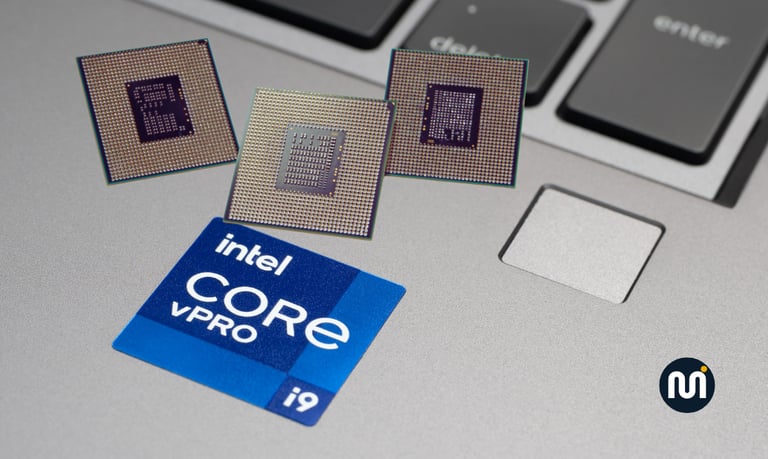
Intel is the first major tech giant to match contributions to the President’s new "Trump Accounts."
Here is why "Political Alignment" is now the most critical metric for your portfolio.
The New Cost of Doing Business
If you are still analyzing stocks based on Price-to-Earnings ratios or free cash flow, you are using a 2024 playbook in a 2026 market. On Wednesday, Intel Corporation didn't just announce a new employee benefit; they announced a new survival strategy.
The chipmaker confirmed it will match the federal government’s $1,000 contribution to "Trump Accounts"—the administration’s flagship tax-advantaged savings vehicle for children born between 2025 and 2028. While banks like JPMorgan and Bank of America have made similar pledges, Intel’s move is different. It is the first signal from the beleaguered tech sector that the path to recovery doesn't just run through Silicon Valley innovation labs—it runs through the Oval Office.
For a company that has spent the last year fighting for its life—navigating layoffs, a missed AI cycle, and a historic restructuring—this isn't charity. It is insurance. Intel is effectively paying a "loyalty dividend" to the administration that holds its fate in its hands.
The "State-Aligned" Stock
To understand why this matters, you have to look at the cap table. In late 2025, following a series of negotiations that would have been unthinkable a decade ago, the U.S. government took a 9.9% equity stake in Intel.
This context changes everything. When Intel announces it will funnel corporate cash into the President’s signature domestic policy program, it isn't just a private company supporting a public initiative. It is a semi-nationalized entity acting in lockstep with the state.
For investors, this creates a new category of asset: State-Aligned Capital.
These companies enjoy a "political put option." They are too strategic to fail and too aligned to be regulated into oblivion. By matching the "Trump Account" funds, Intel is signaling to the market that it is the "Teacher’s Pet" of the semiconductor industry. While competitors might face tariffs or export bans, Intel is buying goodwill.
Why "Trump Accounts" Are the New 401(k)
The "Trump Account" program itself is shaping up to be a massive liquidity engine. With the government seeding accounts with $1,000 for newborns and corporations like Intel matching that amount, we are looking at billions of dollars of inflow into "low-cost index funds" (as mandated by the program rules).
For the broader market, this is a forced buying pressure. Every time an Intel employee has a child, money flows automatically into the S&P 500.
But the human element here is the shift in the "Social Contract." In the old economy, companies attracted talent with ping-pong tables and stock options. In the 2026 economy, Intel is attracting talent by helping employees navigate a politicized financial system. They are saying, "We can get you the government money that other companies can't."
The "Patriot Premium"
This move forces the hand of every other board of directors in America.
If you are the CEO of a rival tech firm, can you afford not to match these contributions? If you don't, you aren't just looking cheap; you look "misaligned." In a world where the White House has shown a willingness to pick winners and losers based on loyalty (remember the "debanking" crackdown of 2025?), remaining neutral is becoming a liability.
We are likely to see a "Patriot Premium" emerge. Companies that adopt these administration-friendly policies will likely see smoother regulatory approvals, better government contracts, and perhaps even tax leniency. Those that resist may find themselves swimming upstream.
What does this specific shock teach us about the next three years of investments?
Policy Alignment is the New Moat.
For fifty years, the "Enduring Lesson" of capitalism was that efficiency wins. The most efficient company makes the most profit.
The lesson of Intel’s pivot is that alignment wins.
In the next three years, the best-performing stocks might not be the ones with the best technology, but the ones with the best political cover. When you analyze a company in 2026, you need to check their "Political Beta." Are they fighting the current, or are they drafting behind the aircraft carrier of the state? Intel has made its choice. Your portfolio should reflect that reality.
Related Stories
The Money Impact © 2026
Business and finance explained by impact.
