
The Oracle’s Warning: Why Warren Buffett Says the Biggest Threat to Your Economy Isn’t Inflation—It’s Your Credit Card
LATESTPERSONAL FINANCE
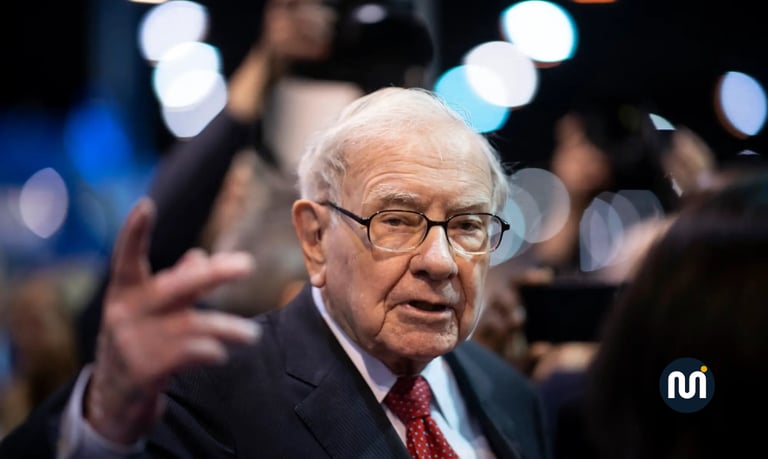
In a rare 2026 interview, Warren Buffett ignores the geopolitical noise to focus on the real wealth killers: debt, bad jobs, and spoiling your kids. Here is his survival guide.
The Quiet in the Storm
While the rest of the financial world is hyperventilating over Greenland tariffs and $5,000 gold, Warren Buffett is doing what he has done for nearly a century: ignoring the headlines to focus on the balance sheet.
In a wide-ranging interview released this week, the 95-year-old Chairman of Berkshire Hathaway didn't talk about trade wars or missile defense systems. Instead, he dismantled the modern American economy at the household level. His message was stark, simple, and for many, incredibly uncomfortable. At a time when the macro environment feels like a casino, Buffett is doubling down on the one thing you can actually control: your own behavior.
He warned that while investors are terrified of "market crashes," the vast majority of financial ruin in 2026 won't come from a stock dropping—it will come from the "unforced errors" of high-interest debt and career misalignment.
The "Ovarian Lottery" vs. The Visa Bill
Buffett’s most urgent warning targeted the normalization of debt. In an era where "Buy Now, Pay Later" has become a lifestyle and credit card APRs are punishing, Buffett was blunt: "Debt can ruin your life."
He described the habit of spending beyond one’s income not as a financial strategy, but as an addiction. "Why in the hell do you want to be underwater?" he asked, noting that once you fall into the trap of compound interest working against you, the game is mathematically rigged.
For the reader, this is a reality check. We spend hours researching which stock to buy to get a 10% return, yet we carry balances that charge us 22% in guaranteed losses. Buffett’s advice cuts through the complexity: In a high-rate economy, paying off debt is the only risk-free investment that guarantees a double-digit return.
The "Smell Test" for Your Career
Perhaps the most poignant moment of the interview came when Buffett pivoted to the labor market. With AI reshaping industries and job security feeling more fragile than ever, his advice on careers was counter-intuitive.
Don't chase the highest salary. Chase the job you would do if you didn't need the money.
"Look for the job you'd take if you didn't need a job," he said. He argued that the "paycheck is incidental" compared to the compound interest of skill acquisition and genuine passion. In 2026, where burnout is the silent killer of productivity, Buffett suggests that working for money alone is a depreciating asset. If you hate your work, no amount of salary can hedge against the misery that eventually erodes your health and your earnings potential.
He also added a crucial filter for choosing an employer: "Be very careful who you work for because you will take on the habits of the people around you." If your boss cuts corners, eventually, you will too.
The "Golden Formula" for Parenting
Buffett also touched on the massive wealth transfer currently underway as Boomers pass assets to the next generation. His philosophy on inheritance remains one of the most debated topics in personal finance, but he distilled it into a "Golden Formula" that every parent needs to hear.
Leave your children "enough money so that they feel they can do anything, but not so much money that they feel they can do nothing."
He warned that the greatest danger to a child’s success isn't a lack of capital, but a lack of hunger. A massive inheritance is often a "lifetime supply of food stamps"—it kills the incentive to hunt. For wealthy parents, the goal shouldn't be to insulate children from the world, but to capitalize them just enough to let them fail safely.
The Mistake of Omission
Finally, Buffett spoke about mistakes. But he didn't talk about buying the wrong stock. He talked about the mistake of hiding reality. He advised parents to let their children read their will before they die.
"You don't want your children asking 'Why?' in respect to testamentary decisions when you are no longer able to respond," he noted. This transparency prevents the kind of family-destroying feuds that often follow a funeral. It’s a grim but practical piece of advice: The economy of a family relies on trust, and secrets are the ultimate inflation on that trust.
What does this specific interview teach us about the next three years of investments?
Survival is Simple, but Not Easy.
The "Enduring Lesson" here is that while we obsess over external risks (who is President, what is the Fed doing), the real risks are internal.
Financial Risk: It’s not the market crash; it’s the credit card balance.
Career Risk: It’s not AI; it’s working for a boss with bad ethics.
Legacy Risk: It’s not the estate tax; it’s raising entitled children.
For the next three years, the most profitable strategy won't be finding the next NVIDIA. It will be removing the friction from your own life. If you can eliminate bad debt, toxic work environments, and family opacity, you have built a fortress that no geopolitical shock can breach.
Related Stories
The Money Impact © 2026
Business and finance explained by impact.
