
The "Tax Wall" Just Fell: Why January 28th Is the Most Important Date for Your Retirement
LATESTPERSONAL FINANCE
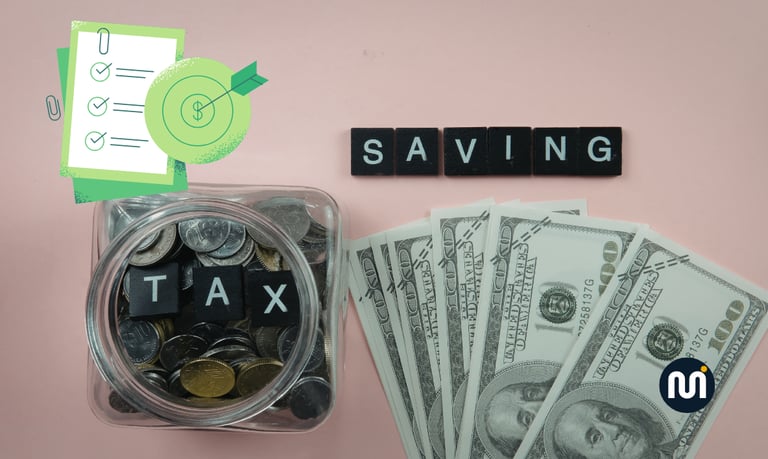
A major rule change on January 28th allows federal employees to rewrite their tax destiny inside the TSP. Here is why this personal finance shift is a game-changer for your money.
The Keys to the Kingdom
For decades, the Thrift Savings Plan (TSP) has been a golden handcuffs scenario for federal employees. It offers low fees and great matching, but it lacked the one thing sophisticated investors crave: flexibility. If you had a massive Traditional balance and wanted to move it to a tax-free Roth account, you had to quit your job or retire to trigger a rollover. You were effectively locked in a "tax prison" of your own making, waiting for the IRS to collect their share later.
In a move that fundamentally alters the landscape of federal personal finance, the TSP is finally launching "in-plan Roth conversions." This isn't just a backend software update; it is a transfer of power from the government to you. For the first time, you can take your existing pre-tax mountain of money and convert it into a tax-free fortress, all without leaving the federal workforce.
Why This Changes the Math
To understand why this matters, you have to look at the "Tax Time Bomb" ticking in most baby boomer and Gen X portfolios.
Most federal employees spent their careers stuffing money into the Traditional TSP to lower their taxes today. That feels great until you retire. Then, every dollar you pull out is taxed as ordinary income. If tax rates go up in the future (a likely bet given the national deficit), you are essentially farming a crop for the IRS to harvest.
The new rule allows you to defuse that bomb on your own terms.
You can now take a slice of your Traditional balance—say, $10,000—and move it to your Roth balance. You pay the taxes on that $10,000 now, at today's known rates, and never pay a dime of tax on that money (or its growth) ever again. It is the financial equivalent of paying a toll today to drive on a free highway forever.
The "Tax Bracket Fill-Up" Strategy
This new feature unlocks a strategy previously reserved for private sector 401(k)s: the "Tax Bracket Fill-Up."
Let’s say you are married and filing jointly, and your taxable income is $150,000. The 22% tax bracket doesn’t end until roughly $200,000 (adjusting for 2026 inflation). That means you have $50,000 of "space" where you can convert money at a relatively low 22% rate before bumping into the 24% or 32% brackets.
Before January 28th, that space was wasted. Now, you can surgically convert just enough TSP money to "fill up" that lower bracket, locking in a low tax rate on money that might otherwise be taxed at 30% or more in the future.
The Trap Door: Don’t Burn Your Cash
While this is a powerful tool, it comes with a dangerous safety warning. When you convert that money, the TSP does not withhold taxes for you.
If you convert $50,000, you might owe the IRS $12,000 next April. If you don’t have that cash sitting in a savings account, you are in trouble. You cannot (and should not) pull the tax money from the retirement account itself, as that defeats the purpose of the growth and triggers penalties.
This feature is for the "cash rich, tax savvy" investor. If you are living paycheck to paycheck, an in-plan conversion is not a tax strategy; it is a debt trap.
The Enduring Lesson
What does this specific shock teach us about the next three years of investments and market behavior?
Flexibility is the New Alpha.
For the last decade, "winning" in personal finance meant picking the right stock (like Nvidia or Apple). In the next three years, "winning" will mean picking the right tax wrapper.
As government deficits swell, tax policy will become volatile. The investors who win won't necessarily be the ones with the highest returns, but the ones who have the flexibility to choose when and how they are taxed. The "Enduring Lesson" here is that you must diversify your tax exposure just as aggressively as you diversify your stocks. Having all your money in a pre-tax bucket is no longer a safe default; it is a wager that taxes will stay low forever. And that is a bet fewer and fewer experts are willing to make.
Related Stories
The Money Impact © 2026
Business and finance explained by impact.
