
The Tug-of-War: Understanding the Changing Guard of Money
LATESTMARKET
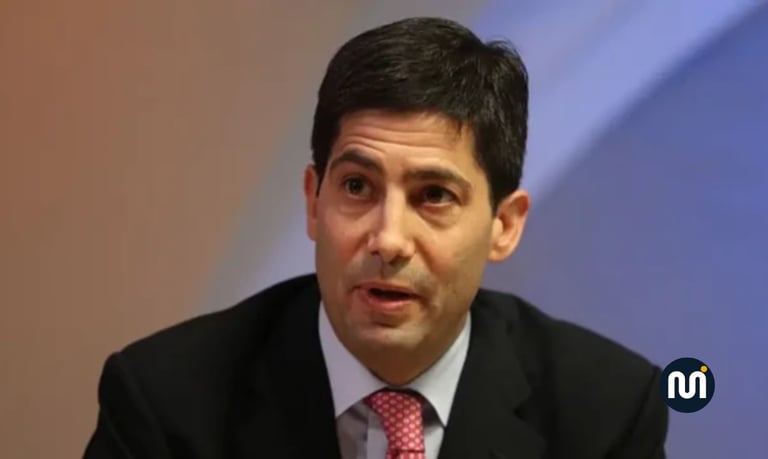
In the world of finance, few things carry as much weight as the choice of who sits at the helm of a central bank.
Recently, we have seen the announcement of a new leader for the Federal Reserve—an event that usually sends ripples through newsrooms and trading floors.
While names and faces change, the underlying mechanics of this transition represent a dance as old as currency itself: the delicate balance between political will and economic stability.
To understand what this means for you, we have to look past the headlines and into the timeless patterns of how money, power, and psychology intersect.
What Is Happening
A new hand is being prepared to take the wheel of the world’s most powerful financial institution. This isn't just a personnel change; it is a shift in philosophy. The transition involves moving from one era of monetary policy to another, where the focus shifts toward shrinking the "footprint" of the central bank, reining in the cost of living, and navigating the complex relationship between the person who prints the money and the person who leads the country.
The Pattern That Repeats
History is a gallery of central bank transitions. Whether it was the shift toward aggressive inflation-fighting in the late 1970s or the move toward massive market interventions during the 2008 crisis, the pattern is always the same: The Pendulum Swing.
Central banking tends to swing between two poles. On one side, you have "Interventionism," where the bank acts as a constant gardener, pruning and watering the economy with low interest rates and massive bond purchases. On the other side, you have "Restraint," where the bank tries to step back, let the markets find their own level, and focus strictly on keeping the currency stable.
We have seen this in every major economy. Whenever a central bank grows too large or its influence too pervasive, a movement inevitably arises to "normalize" it. This isn't a new phenomenon; it is the natural correction of an institution that has become a victim of its own previous successes or failures.
What Actually Changes When This Happens
When a central bank signals a shift toward shrinking its influence—often called "shrinking the balance sheet"—the structural plumbing of the global economy changes.
People’s Behavior: When money is "easy" (plentiful and cheap), people become adventurous, sometimes even reckless. When a new leader signals a tighter ship, that psychological safety net begins to fray. People start questioning the "easy win" and become more scrutinizing of where they put their effort and capital.
The Flow of Money: For years, money might have flowed into speculative assets because the central bank was effectively "backstopping" the market. When the guard changes and the philosophy shifts toward restraint, that money begins to flow back toward "safety" and "utility." It moves from "what could be" to "what actually is."
Financial Decision-Making: Institutions stop asking "How much can we borrow?" and start asking "How much do we actually need?" The era of the "blank check" mentality slowly evaporates, replaced by a return to fundamental accounting.
The Impact on People’s Financial Lives
While the talk of "central bank independence" sounds abstract, the impact on your kitchen table is very real.
Income: In a regime focused on "taming" the economy to prevent overheating, wage growth might stabilize. The "frenzy" of the job market often cools, leading to a period where keeping a job becomes more about specialized value than just being a warm body in a seat.
Credit: This is the most immediate sting. When the central bank shrinks its footprint, the cost of borrowing—from mortgages to credit cards—tends to stay "higher for longer." The days of "free money" disappear, making debt a heavy backpack rather than a pair of wings.
Investments: Markets hate uncertainty, but they also hate losing their best friend (the central bank). You may see higher volatility as the market learns to walk without holding the Fed’s hand. Assets that relied on low interest rates to look good suddenly lose their luster.
Financial Security: The goal of these transitions is usually to protect the purchasing power of your money. If successful, your savings stop losing value as quickly to inflation, but the "safety" comes at the price of slower growth in your house value or stock portfolio.
How to Think About Money in These Scenarios
When the economic winds shift toward restraint and "normalization," the smartest posture is one of Resilience over Leverage.
In "easy money" times, the person who borrows the most often wins the most. In "tight money" times, the person with the cleanest balance sheet wins. This is a time for "Financial Hygiene." It’s about looking at your debts and asking if they are productive or destructive. It’s about looking at your income and ensuring it comes from a source that provides real, tangible value that people will still want to buy when money is no longer "free."
Scaling money in this environment requires a "Value Mindset." You stop looking for the next "moonshot" and start looking for "compounding machines"—businesses or assets that generate real cash flow and don't need a government lifeline to survive.
The Most Common Mistake People Make
The most recurring mistake in this cycle is Recency Bias. People tend to believe that the conditions of the last decade are the "permanent" rules of the universe. If they grew up in an era where the central bank always stepped in to save the market, they assume it will always happen. They over-leverage at exactly the moment the safety net is being pulled away.
They treat a "revolving door" transition as if it’s just another news cycle, failing to realize that a change in leadership is often the funeral for an old economic era and the birth of a new, more disciplined one. They keep playing the old game while the rules have already been rewritten.
What This Signals About the Future
This type of event usually signals a transition from Quantity to Quality.
We are moving into a phase where the "noise" of the market—driven by excess liquidity—begins to quiet down. This suggests a future where economic winners will be determined by efficiency and innovation rather than who can access the cheapest debt. It also signals a period of "Institutional Testing," where the independence of the bank is challenged by political leaders.
It suggests that the "easy ride" is over, but a "healthier" foundation is being laid. The future will likely reward those who are patient, disciplined, and focused on the long-term utility of their work and investments.
Leadership at the top of the financial world will always be a mirror of the era's greatest fears and hopes. When we fear inflation, we appoint hawks. When we fear stagnation, we appoint doves.
But for the individual, the names on the door matter less than the fundamental principles of money. Markets will always breathe in and breathe out. The "In-breath" is the expansion, the debt, and the exuberance. The "Out-breath" is the restraint, the contraction, and the return to reality.
The secret to financial peace isn't predicting who will lead the next cycle; it’s building a financial life that is sturdy enough to thrive in the "Out-breath" and disciplined enough not to lose its head during the "In-breath." The guard changes, the currency fluctuates, but the value of prudence remains the only true constant in the history of wealth.
Related Stories
The Money Impact © 2026
Business and finance explained by impact.
